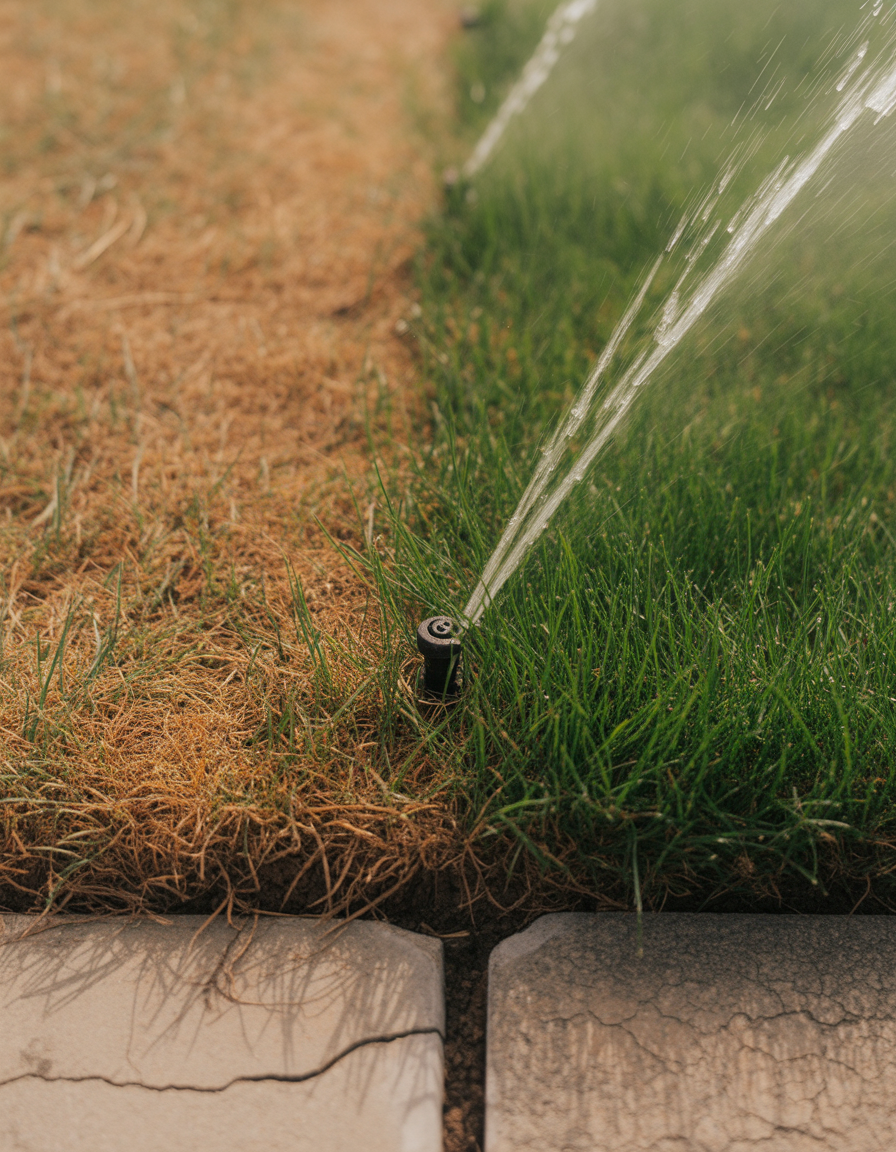
You water your lawn faithfully—maybe even more than your neighbors—yet the grass still looks dull, crunchy, or patchy. It’s frustrating, but you’re not alone. Many homeowners experience lawn dryness even when they believe they’re doing everything right.
The truth is: watering alone isn’t always enough to keep grass healthy. Several behind-the-scenes factors determine whether your lawn actually absorbs the water you give it.
Let’s explore the most common reasons lawns dry out despite regular watering—and what you can do to fix it.
1. You’re Watering at the Wrong Time of Day
Watering during the heat of the day leads to rapid evaporation, especially in summer. That means your grass gets only a fraction of the water you’re applying.
Best practice:
✔ Water early in the morning between 5 AM and 9 AM
This gives the soil time to absorb moisture before the sun evaporates it.
2. Shallow, Frequent Watering Weakens Roots
If you water lightly every day, the moisture stays near the surface. Grass roots won’t grow deeper because they don’t need to—and shallow roots dry out fast.
Best practice:
✔ Water deeply and less often
Aim for 1–1.5 inches per week, divided into 2–3 deep sessions.
3. Soil Compaction Prevents Water from Penetrating
Over time, foot traffic, mowers, pets, and even rainfall compress your soil. Compacted soil acts like concrete:
Water pools on top
Grass can’t push roots deeper
Moisture evaporates before doing any good
Signs of compaction:
• Hard ground
• Thin or patchy grass
• Water runoff
Solution:
✔ Aerate your lawn once or twice a year.
4. Your Soil Type Might Work Against You
Different soils handle water differently:
Sandy soil drains too quickly → grass dries out
Clay soil holds water poorly and becomes hard when dry
Loamy soil (the ideal) balances absorption and drainage
If your grass dries quickly after watering, your soil type may be the culprit.
Solution:
✔ Add organic matter like compost to improve water retention and structure.
5. Thatch Build-Up Blocks Water
Thatch is a layer of dead roots and stems between the soil and the grass blades. A thin layer is healthy—but anything over ½-inch becomes a spongey barrier that:
Blocks water
Reduces nutrient absorption
Suffocates roots
Solution:
✔ Dethatch your lawn or use a power rake when the thatch layer becomes too thick.
6. Water Isn’t Reaching All Areas Equally
Even when your sprinkler “looks” like it covers everything, real coverage may be uneven. Dry patches often come from:
Blocked sprinkler heads
Poor nozzle design
Mismatched sprinkler patterns
Wind interference
Solution:
✔ Place a few containers around the yard and run your system—compare how much each one collects. Adjust as needed.
7. Heat Stress and Seasonal Dormancy
In very hot weather, many turf types naturally go into survival mode—they brown and conserve water even with regular irrigation.
Cool-season grasses like fescue, bluegrass, and rye are especially vulnerable in summer.
Solution:
✔ Raise your mower height
✔ Avoid fertilizing during extreme heat
✔ Add afternoon shade if possible
8. Underlying Lawn Health Issues
Dryness can also be a symptom of:
Grubs eating the roots
Improper mowing
Even consistent watering won’t help if the roots are compromised.
The Bottom Line
A dry lawn doesn’t always mean you’re not watering enough—it usually means your grass can’t use the water effectively. By addressing soil health, watering technique, and lawn care practices, you can help your lawn stay green, lush, and resilient all season long.