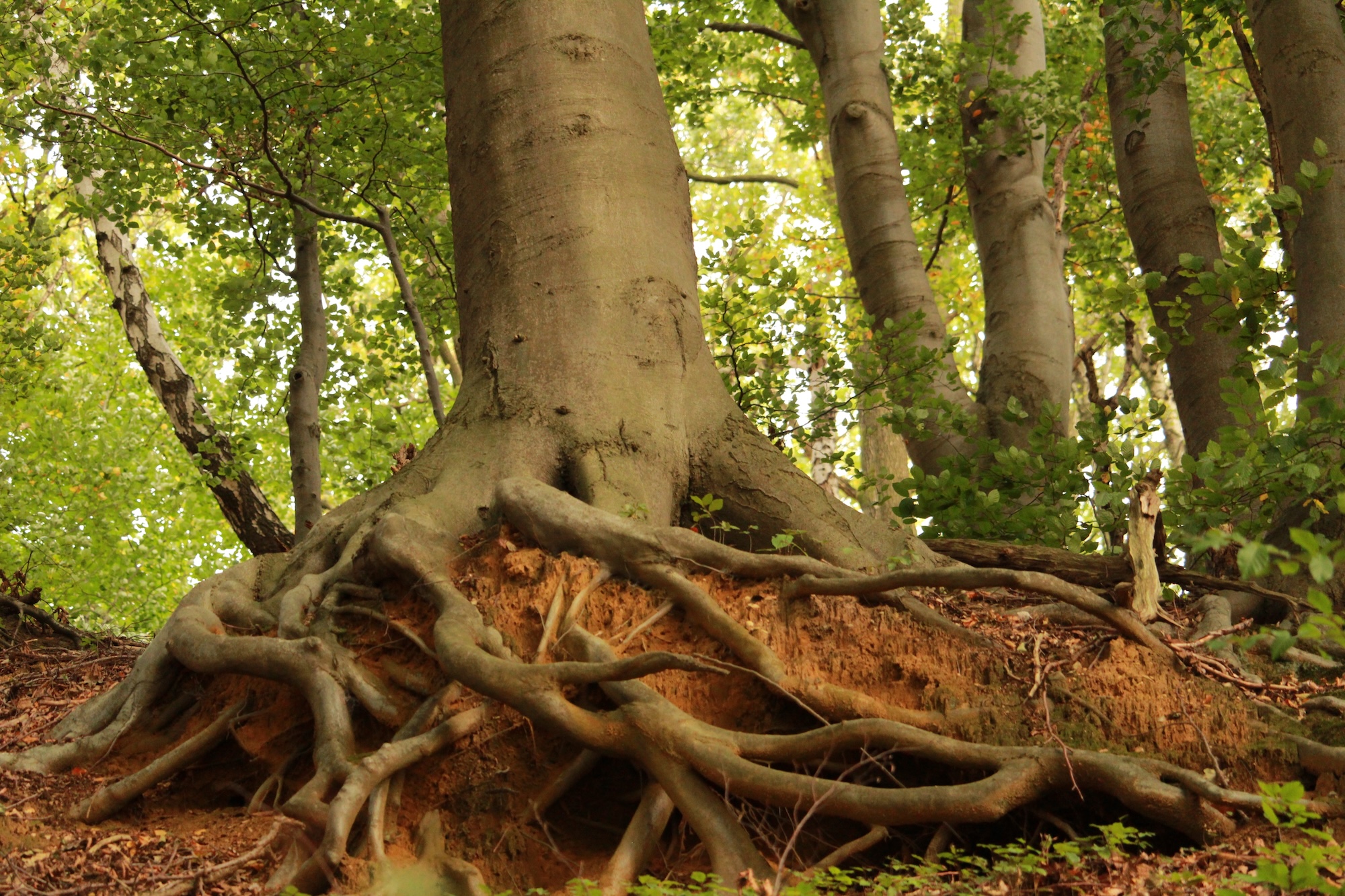
When a mature tree begins to decline—yellowing leaves, thinning canopy, or sudden branch dieback—many homeowners suspect insects or disease. But one of the most common and overlooked killers of healthy trees is something hidden below the surface: girdling roots.
Understanding what girdling roots are, why they form, and how they destroy even decades-old trees can help you protect the valuable trees on your property.
What Are Girdling Roots?
Girdling roots are tree roots that grow in a circular pattern around the trunk instead of spreading outward. As the tree grows, these roots begin to tighten around the base—much like a constricting belt—compressing the trunk and interfering with the tree’s ability to move water and nutrients.
Think of it like a tree slowly choking itself.
How Girdling Roots Form
Girdling roots typically form due to environmental or planting problems, including:
1. Improper Planting Depth
Trees planted too deep or with excess soil piled around the trunk force new roots to grow upward and around the stem.
2. Container-Grown Trees
Trees grown in pots or nursery containers often develop circling roots early. If these roots are not loosened or cut before planting, they continue to grow in a spiral underground.
3. Compacted or Restricted Soil
When roots can’t expand outward due to hard, compacted soil or barriers like sidewalks, they take the path of least resistance—around the trunk.
4. Mulch Volcanoes
Thick layers of mulch piled against the trunk encourage roots to grow into the mulch instead of into the soil. These new roots often circle the tree.
Why Girdling Roots Kill Mature Trees
Girdling roots can form at any time, but the damage may take years to become obvious. Here’s why they’re so deadly:
1. They Restrict Water and Nutrient Flow
The trunk base carries water and nutrients between the roots and canopy. When a girdling root applies pressure, it compresses this vital transport system—similar to pinching a hose.
2. They Reduce Structural Stability
As the root tightens, the trunk becomes weaker at the base. Trees with severe girdling roots are prone to splitting or falling, even in mild storms.
3. They Cause Crown Decline
The canopy suffers first. Signs include:
Thinning leaves
Small or pale foliage
Dead branches
Early fall color
These symptoms often mimic disease, making diagnosis difficult.
4. They Can Kill One Side of the Tree
A girdling root may only wrap part of the trunk. This often results in one side of the crown dying back because the connected vascular tissue is slowly strangled.
Signs Your Tree Has Girdling Roots
You may spot girdling roots without digging. Look for:
A trunk that appears flat on one side instead of round
Roots visible at or just above the soil surface circling the trunk
Thin or declining canopy
Poor growth despite adequate watering
Early leaf drop or stunted leaves
If you suspect girdling roots, contact a certified arborist to perform a root collar excavation.
Can Girdling Roots Be Fixed?
Yes—if caught early.
A trained arborist can remove or cut girdling roots that are compressing the trunk. The process must be done carefully, because removing major roots can stress the tree.
Late-stage girdling root damage may be irreversible, and the tree could eventually fail.
How to Prevent Girdling Roots
✔ Plant trees at the correct depth
Ensure the root flare—the point where the trunk meets the roots—is visible above the soil.
✔ Address circling roots before planting
Loosen or prune container roots so they spread outward.
✔ Avoid mulch volcanoes
Apply mulch 2–3 inches deep, keeping it several inches away from the trunk.
✔ Improve soil conditions
Reduce compaction and provide space for roots to spread naturally.
Conclusion
Girdling roots are silent killers that can destroy even mature, otherwise healthy trees. By understanding how they form and what to look for, homeowners can prevent long-term damage and avoid costly tree removal.
Investing in proper planting and periodic root inspections can save your trees—and your landscape—from this hidden threat.